

Genesis - Hardy Passionfruit Vines - Naturally Grown
Genesis - Hardy Passionfruit Vines - Naturally Grown
Couldn't load pickup availability

Alert me if this item is restocked.
We often restock popular items or they may be returned by the other customers. If you would like to be notified when this happens just enter your details below.
Genesis - Hardy Passionfruit Vines - Naturally Grown
We respect your privacy and don't share your email with anybody.
Alert me if this item is restocked
THESE ARE AVAILABLE IN EXTREMELY LIMITED QUANTITIES IN 2026! WE SHOULD HAVE MORE IN 2027 AS WE EXPAND PROPAGATION OF THIS PREMIUM PLANT! ONE PLANT ONLY PER CUSTOMER!
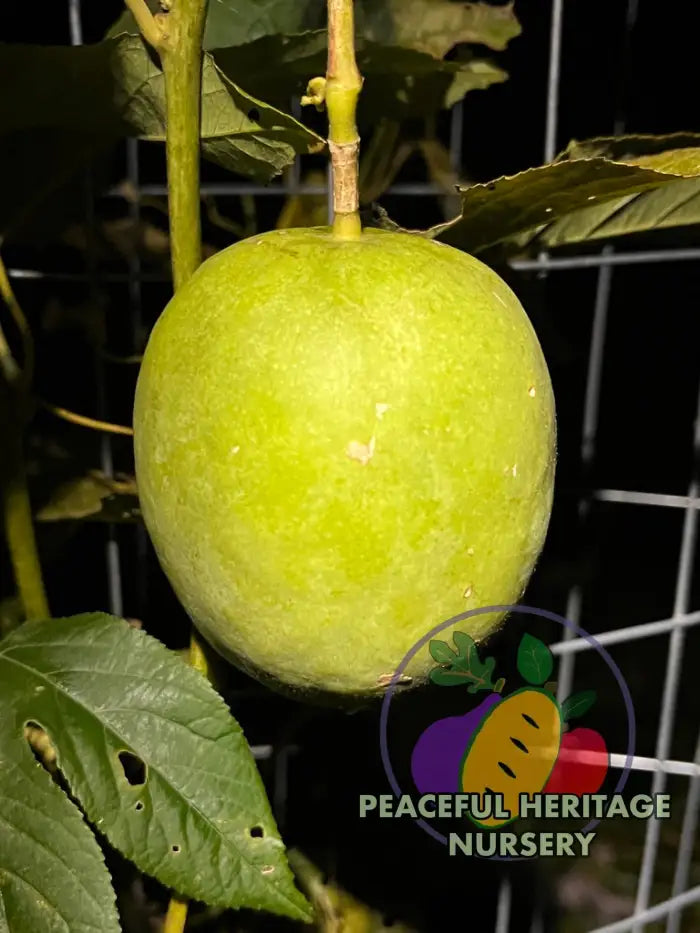
EXCLUSIVE! After nearly 10 years of PHN passion fruit trials, a champion has arisen. We're extremely pleased to release our 1st ever named hardy passionfruit. This marks what could be the 1st ever named release of P. incarnata for food production (not ornamental flowers), at least in the USA. Wow!
What makes Genesis passionfruit special? Blake describes it as follows:
- The flavor is excellent. It has a luscious, sweet, fruity flavor with lime, banana and citrus undertones. The pulp is yellow. Flavor is substantially better than average.
- The fruit size is substantially larger than even our Superior seedling line. Average Genesis fruit weight is 73 grams, with many over 80 grams, and one fruit even weighing in at 93 grams in 2025.
- The fruit is packed densely with juice-filled pulp (see photo of a single fruit that was pulped).
- It is non hybridized, being 100% P. incarnata.
- The fruit has a lovely, round, squat shape with distinct quadrants, as opposed to the average egg shape. This fruit shape appears stable.
- The vines are heavy yielding.
- The fruit at first appeared to be late ripening, but now we believe it is about average and ripens with most of our other seedlings (mid September in KY).
What stands out most is the huge fruits and the amazing flavor. It's just on a whole other level compared to most other P. Incarnata seedlings. Blake thinks this is one of his best plant releases, and perhaps the most significant thus far.
Blake also says this: 'It's like the Susquehanna of hardy passionfruit. Joseph Urias (Planting Justice) visited in autumn 2025 and tried it. He works in the fruit germplasm repositories in California, and knows his fruit extremely well. He was amazed and said it was one of the best passionfruits he had ever tasted, period.'
It should be noted that this selection at first appeared to be late ripening but with more data it now appears to be ripening about the same time as all the others we grow.
- Passionfruit vines, being hardy natives, are often little damaged by insects or disease of any kind, and are quite productive of fruits. The vines grow vigorously and will soon rapidly climb and create stunning ornamental cover for arbors, fences, decks, etc, making a wonderful natural screen and shade. One vine seems able to produce about 15+ fruits per season, which is September-November. The flowers begin to bloom around July-August and are just stunning.
-Plants your vines about 3-4 feet apart as early in the season after all danger of frost is passed. Very winter hardy once established. Come late autumn they die back to the ground in zone 6 but in late spring will resprout from their roots, vine out, flower and fruit again, thus these are PERENNIAL. Will flower and fruit usually the same year of planting if planted in spring.
In Zones 8-10 it may become a permanent woody vine. These are Passiflora incarnata. See photos. Naturally Grown at Peaceful Heritage Nursery.
RECOMMENDED FOR ORGANIC GROWING - NATURALLY GROWN PLANTS
Planting Site: Full sun to nearly full sun locations. It needs to climb. This plant suckers profusely so should not be planted anywhere near objects or plants you do not wish it to soon find and climb.
Resistant to: Highly resistant to insects and disease in general. Watch out for Japanese beetles, which can sometimes eat the flowers. Orange passiflora flea beetles can be damaging to very young plants, insect netting and Surround are effective at control.
Pollination: Possibly self-fertile, but we are still determining that.
Any P.incarnata seedlings will pollinate it. Pollination is performed by bumblebee species. If you do not have natural pollinators, you may need to hand pollinate. May bear more fruit with cross-pollination by vines from our Superior Hardy passionfruit strain.
Plant Size: Approximately 8-12" Tall when shipped in the growing season. They grow rapidly once planted and usually fruit the first year. If these ship between February-April the small plants will be dormant and little to no (annual) vine may be present, but the perennial roots are there and will grow new vines rapidly come May, and usually fruit that first summer in most places.
Zones 6-10
CANNOT SHIP TO CA, WA
See our passionfruit on Youtube:
https://www.youtube.com/watch?v=gOBzMjZj_6s&t=4s